Treatment Options for Hyperthyroidism
Hyperthyroidism Treatment for Cats | Medication, Surgery & Radioiodine
Compare treatment options for hyperthyroidism in cats, including medication, diet, surgery and radioiodine (I-131). Find the best option for your cat.
Choosing the right treatment
There are several ways to treat hyperthyroidism in cats, each with advantages and limitations. The right choice depends on your cat’s health, temperament, and your preferences as an owner. There are four options available, two of these provide a cure to the disease, and two of these offer lifelong management of the disease.
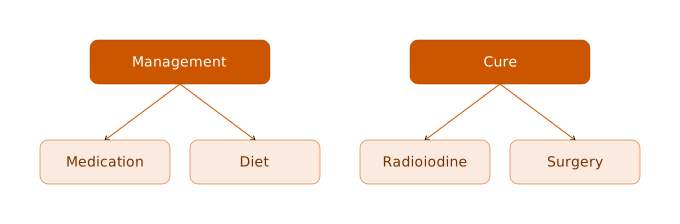
Management
Medical treatment
Medical treatment involves giving your cat a daily tablet, liquid, or gel (applied to the inner ear) that reduces the amount of thyroid hormone the gland produces. It is usually effective at controlling the clinical signs and symptoms of hyperthyroidism and can make your cat feel much better within a few weeks.
It is important to understand that medical treatment does not cure the underlying disease, it only manages it. Your cat will need treatment every day for the rest of their life, and the dose may need adjusting over time. Regular blood tests, usually every 3 months, are needed to check thyroid levels and monitor kidney function and general health.
Even with treatment, the disease can progress. The thyroid gland may keep growing, meaning higher doses are needed over time, and in some cases the thyroid tissue can become cancerous.
Dietary treatment
An alternative option is a prescription low-iodine diet (such as Hill’s y/d), which works by restricting the iodine available for the thyroid gland to use in producing hormone. This can be effective at controlling thyroid levels, but only if it is followed strictly and exclusively.
This means your cat cannot eat any other food, treats, or table scraps, including anything another cat in the household might be eating. This makes it difficult to manage in multi-cat homes, unless every cat can be fed the same diet, and impractical for cats that hunt or roam outdoors and may catch prey or take food elsewhere. If your cat eats anything other than the prescribed diet, or stops eating it, thyroid hormone levels will rise again.
Cure
Surgery
Surgically removing one or both thyroid glands offers the chance of a permanent cure for hyperthyroidism, since it removes the overactive tissue producing excess hormone.
This option does require a general anaesthetic, which carries some risk in any patient. Cats with hyperthyroidism tend to be older and can also have other conditions, such as heart disease or reduced kidney function, so a thorough pre-anaesthetic work-up is important to assess how well they are likely to cope with surgery.
There are some specific risks associated with thyroid surgery itself. The parathyroid glands, which control calcium levels in the blood, sit very close to the thyroid glands and can occasionally be damaged or accidentally removed during the operation. This can lead to complications after surgery. If only one gland is removed and the other appears normal at the time, there is also a chance that the remaining gland could become overactive at a later date, meaning the hyperthyroidism returns and further treatment is needed.
In terms of cost, surgery is generally less expensive than radioiodine treatment, though this needs to be weighed against the chance that a second procedure may be needed in future if hyperthyroidism recurs.
Radioiodine treatment (I-131)
Radioiodine therapy is widely regarded as the most effective and definitive treatment for feline hyperthyroidism. It involves a single injection of radioactive iodine that selectively destroys abnormal thyroid tissue while leaving healthy tissue largely unaffected.
Unlike surgery, it treats all thyroid tissue, including areas that cannot be reached surgically, and most cats do not need to be sedated for the treatment. More than 95% of cats are cured after only one treatment and do not need ongoing medication afterwards.
Helpful Links
International Cat Care – Hyperthyroidism in cats