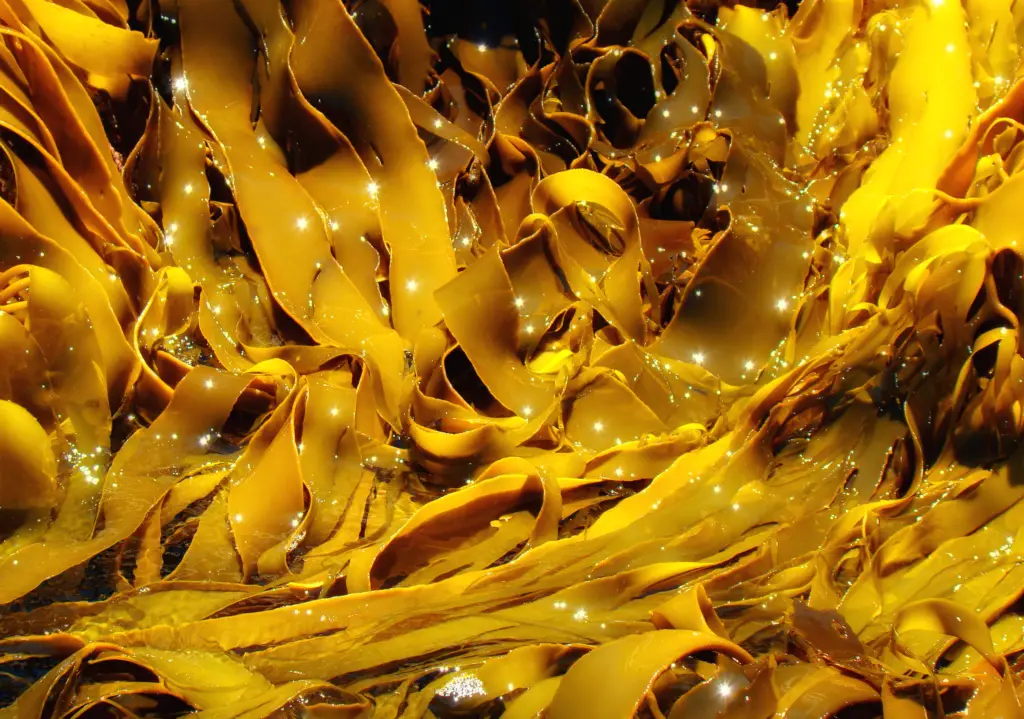
What does our treatment and seaweed have in common?
The link between iodine and thyroid health stretches back much further than modern medicine. As early as 2700 BC, Chinese physicians were treating goitres, the visible swelling of an enlarged thyroid gland, with seaweed. Although the concept of iodine as an element didn’t exist yet, these remedies worked because seaweed is naturally rich in iodine, and practitioners had observed through trial and experience that these treatments reduced swelling. Similar seaweed and sponge based remedies later appeared in ancient Greek and Roman medical texts, suggesting the knowledge either spread or was independently discovered across cultures.
Iodine itself wasn’t formally identified until 1811, when French chemist Bernard Courtois isolated it from seaweed ash while producing saltpetre for gunpowder. Within a few years, physicians such as Jean-Francois Coindet in Switzerland began using iodine compounds to treat goitre, effectively rediscovering through chemistry what Chinese medicine had understood empirically for millennia.
Radioactive iodine came much later. Iodine 131 was discovered in 1938 by Glenn Seaborg and John Livingood at the University of California, Berkeley. Its medical potential was recognised almost immediately, since the thyroid gland absorbs iodine to produce thyroid hormone, making it possible to deliver a therapeutic radioactive dose directly to thyroid tissue while sparing the rest of the body.
The first therapeutic use in humans came in 1941, when researchers at the Massachusetts General Hospital used I-131 to treat a patient with an overactive thyroid gland. Throughout the 1940s and 1950s, the treatment became established for both hyperthyroidism and, at higher doses, thyroid cancer. It remains a mainstay of human endocrinology today, valued for its precision and its ability to avoid surgery.
Veterinary use followed several decades later. Feline hyperthyroidism was first formally described as a distinct clinical disease in 1979, and it quickly became apparent that cats, like people, developed thyroid tumours that concentrated iodine in the same way. Researchers at institutions including the University of California and the Animal Medical Center in New York began adapting human radioiodine protocols for cats throughout the early 1980s, and by the mid to late 1980s, dedicated feline radioiodine treatment services started to appear in the United States.
The treatment reached the UK later still. Today, radioiodine is recognised as the gold standard treatment for feline hyperthyroidism internationally, curing the underlying disease in a single treatment for the majority of cats, a direct descendant of a therapeutic idea that began with seaweed ash more than five thousand years ago.